Command Keys For Mac Font Color Text

Active5 years, 11 months ago
List Of Command Keys For Mac
You can get to the Font tab by hitting the F key. Then you can hit alt-c to select the font color drop down. You can use the arrow keys to select the color you want. For each hotkey you create, you must put a series of symbols which represent modifier keys (CTRL, ALT, Windows Key, etc), then a primary key (a,b,c,d, etc) and then two colons (::) as a delimiter.
I often change the font size of my editor. So does anyone know a shortcut key for that? Until now I have to use the menu with several clicks: Preferences -> Color and Fonts -> Basic -> Text Font. Would be nice of one can use CTRL + MouseWheel...
Simon Dugré7,9169 gold badges46 silver badges70 bronze badges
Peter SchmitzPeter Schmitz4,2042 gold badges21 silver badges45 bronze badges
3 Answers
I am sure at some point of time you would have wanted to increase/decrease the font using CTRL + + or mouse scroll.Found one solution, CTRL and +/- keys for increasing and decreasing font.
- Download jar from http://code.google.com/p/tarlog-plugins/downloads/list
- Place the jar in plugins directory of eclipse installation
- Restart eclipse.
Enjoy
Anri5,1773 gold badges28 silver badges57 bronze badges
NullPointerExceptionNullPointerException
You can get close by binding your-favorite-function-key to the command. Here's how:
- Windows > Preferences > General > Keys
- Locate the command related to setting the font >> Preferences (General > Appearance > Colors and Fonts)
- Click inside the Binding text field
- Specify the key-binding you wish to use by pressing the appropriate keys
- Accept by pressing OK
- Profit!
6,6264 gold badges30 silver badges42 bronze badges
I'm using Aptana with an English keyboard and casually came into these keys combinations- [CTRL] + [-] then 1 --> smaller font- [CTRL] + [SHIFT] + [=] --> bigger font
NOTE:[-] key is on the main keyboard, not the numeric pad[SHIFT] + [=] gives + in the English keyboard
tHomastHomas
Not the answer you're looking for? Browse other questions tagged eclipsekeyboard-shortcuts or ask your own question.
Newer versionsOffice 2011
For users with mobility or vision disabilities, keyboard shortcuts are an essential alternative to using a mouse.
Notes:
The shortcuts in this topic refer to the US keyboard layout. Keys for other layouts might not correspond exactly to the keys on a US keyboard.
Commands that require you to press and release multiple keys together are indicated with a plus sign (+). Commands that require you to press multiple keys in order are indicated by a comma sign (,).
The settings in some versions of the Mac operating system (OS) and some utility applications might conflict with keyboard shortcuts and function key operations in Office for Mac. For information about changing the key assignment of a keyboard shortcut, see Mac Help for your version of the Mac OS or see your utility application. Also see Shortcut conflicts later in this topic.
In this topic
Frequently used shortcuts
This table provides the frequently used shortcuts in Word 2016 for Mac.

To do this | Press |
|---|---|
Undo the last action | + Z or Control + Z |
Cut selected text or graphics | + X or Control + X |
Copy selected text or graphics to the Clipboard | + C or Control + C |
Paste the Clipboard contents | + V or Control + V |
Choose the Go To command (Edit menu) | Option + + G |
Open the Spelling and Grammar dialog box | Option + + L |
Extend a selection | F8 |
Go to the next window | + Grave accent ( ` ) |
Choose the Save As command (File menu). | + Shift + S |
Copy selected text | Shift + F2 |
Change letters to uppercase, lowercase, or mixed case | Shift + F3 |
Find or Find and Replace | Control+F for Find; places the focus in the Search box Control+H for Find and Replace |
Print a document | + P or Control + P |
Move to the previous insertion point | Shift + F5 |
Go to the previous window | + Shift + ` |
Open the Thesaurus pane | Shift+ F7 |
Shrink a selection | Shift+ F8 |
Switch between a field code and its result | Shift + F9 |
Cut the selection to the Spike | + F3 |
Close the window | + F4 |
Expand or minimize the ribbon | Option + + R |
Edit a bookmark | + Shift + F5 |
Find the next misspelling or grammatical error. The Check spelling as you type check box must be selected (Word menu, Preferences command, Spelling and Grammar). | Option + F7 |
Look up selected text on the Internet | + Shift + L |
Get started
For the best experience using your keyboard with the ribbon, try switching your keyboard settings to All Controls, as follows:
Open System Preferences ( + Space, type system preference, and hit Enter).
Go to Keyboard Settings (type keyboard and hit Enter).
Go to Shortcuts (press Tab, then Right-arrow three times, and then Space).
Change the Full Keyboard Access setting from Text boxes and lists only to All Controls (Control + F7)
Many keyboards assign special functions to function keys, by default. To use the function key for other purposes, you have to press Fn+the function key. For more information about how to enable and use function keys without having to press Fn, see Use function key shortcuts later in this topic.
Shortcut conflicts
Some Windows keyboard shortcuts conflict with the corresponding default Mac OS keyboard shortcuts. To use these shortcuts, you may have to change your Mac keyboard settings to change the Show Desktop shortcut for the key.
Change system preferences for keyboard shortcuts with the mouse
On the Apple menu, press System Preferences.
Click Keyboard.
Press the Shortcuts tab.
Click Mission Control.
Clear the check box for the keyboard shortcut that you want to use.
Move the cursor
To do this | Press |
|---|---|
Move one character to the left | Left arrow |
Move one character to the right | Right arrow |
Move one word to the left | Option + Left arrow |
Move one word to the right | Option + Right arrow |
Move one paragraph up | + Up arrow |
Move one paragraph down | + Down arrow |
Move one cell to the left (in a table) | Shift + Tab |
Move one cell to the right (in a table) | Tab |
Move up one line | Up arrow |
Move down one line | Down arrow |
Move to the end of a line | + Right arrow or End |
Move to the beginning of a line | + Left arrow or Home |
Move up one screen (scrolling) | Page Up |
Move down one screen (scrolling) | Page Down |
Move to the top of the next page | + Page Down |
Move to the top of the previous page | + Page Up |
To the end of a document | + End On a MacBook keyboard: |
To the beginning of a document | + Home On a MacBook keyboard: |
To the previous insertion point | Shift + F5 |
Select text and graphics
Tip: If you know the key combination to move the cursor, you can generally select the text by using the same key combination while holding down Shift. For example, + Right arrow moves the cursor to the next word, and + Shift + Right arrow selects the text from the cursor to the beginning of the next word.
To do this | Press |
|---|---|
Select multiple items not next to each other | Select the first item that you want, hold down , and then select any additional items |
Select one character to the right | Shift + Right arrow |
Select one character to the left | Shift + Left arrow |
Select one word to the right | Shift + Option + Right arrow |
Select one word to the left | Shift + Option + Left arrow |
Select to the end of a line | + Shift + Right arrow or Shift + End |
Select to the beginning of a line | + Shift + Left arrow or Shift + Home |
Select one line down | Shift + Down arrow |
Select one line up | Shift + Up arrow |
Select to the end of a paragraph | + Shift + Down arrow |
Select to the beginning of a paragraph | + Shift + Up arrow |
Select one screen down | Shift + Page Down |
Select one screen up | Shift + Page Up |
Select to the beginning of a document | + Shift + Home |
Select to the end of a document | + Shift + End |
Select to the end of a window | Option + + Shift + Page Down |
Select to select the entire document | + A |
Select to a vertical block of text | + Shift + F8 , and then use the arrow keys; press Esc to cancel selection mode |
Select to a specific location in a document | F8 , and then use the arrow keys; press Esc to cancel selection mode |
Select text and graphics in a table
To do this | Press |
|---|---|
Select the next cell's contents | Tab |
Select the preceding cell's contents | Shift + Tab |
Extend a selection to adjacent cells | Hold down Shift and press an arrow key repeatedly |
Select a column | Click in the column's top or bottom cell. Hold down Shift and press the Up arrow or Down arrow key repeatedly |
Extend a selection (or block) | + Shift + F8 , and then use the arrow keys; press Esc to cancel selection mode |
Reduce the selection size | Shift + F8 |
Select multiple cells, columns, or rows that are not next to each other | Select the first item that you want, hold down , and then select any additional items |
Extend a selection
To do this | Press |
|---|---|
Turn on extend mode | F8 In extended selection mode, clicking a location in the document extends the current selection to that location. |
Select the nearest character to the left | F8, Left arrow |
Select the nearest character to the right | F8, Right arrow |
Expand a selection | Press F8 repeatedly to expand the selection to the entire word, sentence, paragraph, section, and document. |
Reduce the size of a selection | Shift + F8 |
Turn off extend mode | Esc |
Edit text and graphics
To do this | Press |
|---|---|
Copy text or graphics | + C or F3 |
Copy a style | + Shift + C |
Paste a style | + Shift + V |
Copy text or graphics to the Scrapbook | Control + Option + C |
Cut selected text to the clipboard | + X or F2 |
Move text or graphics | + X or F2 (then move the cursor and press + V or F4 ) |
Create AutoText | Option + F3 |
Insert AutoText | + Option + Shift + V |
Paste the Clipboard contents | + V or F4 |
Paste special | + Control + V |
Paste and match the formatting of the surrounding text | + Option + Shift + V |
Paste the Spike contents | + Shift + F3 |
Delete one character to the left | Delete |
Delete one word to the left | + Delete |
Delete one character to the right | or Clear |
Delete one word to the right | + |
Cut selected text to the Clipboard | + X or F2 |
Undo the last action | + Z |
Redo the last action | + Y |
Cut to the Spike | + F3 |
Drawing
To do this | Press |
|---|---|
Center a paragraph | + E |
Justify a paragraph | + J |
Left-align a paragraph | + L |
Right-align a paragraph | + R |
Indent a paragraph from the left | Control + Shift + M |
Remove a paragraph indent from the left | + Shift + M |
Create a hanging indent | + T |
Remove a hanging indent | + Shift + T |
Start AutoFormat | + Option + K |
Apply the Normal style | + Shift + N |
Apply the Heading 1 style | + Option + 1 |
Apply the Heading 2 style | + Option + 2 |
Apply the Heading 3 style | + Option + 3 |
Apply the List style when the cursor is at the beginning of a line | + Shift + L |
Insert a nonbreaking space | Option + Spacebar |
Set line spacing
To do this | Press |
|---|---|
Set lines as single-spaced | + 1 |
Set lines as double-spaced | + 2 |
Set lines as 1.5-line spacing | + 5 |
Add or remove one line of space directly preceding a paragraph | + 0 (zero) |
Format characters
To do this | Press |
|---|---|
Change the font | + Shift + F |
Increase the font size | + Shift + > |
Decrease the font size | + Shift + < |
Increase the font size by 1 point | + ] |
Decrease the font size by 1 point | + [ |
Change the formatting of characters (Font command, Format menu) | + D |
Change the case of letters | Shift + F3 |
Format in all capital letters | + Shift + A |
Apply bold formatting | + B |
Apply an underline | + U |
Underline words but not spaces | + Shift + W |
Double-underline text | + Shift + D |
Apply italic formatting | + I |
Format in all small capital letters | + Shift + K |
Apply subscript formatting (automatic spacing) | + Equal sign |
Apply superscript formatting (automatic spacing) | + Shift + Plus sign |
Apply strike-through formatting | + Shift + X |
Insert special characters
To do this | Press |
|---|---|
Insert an empty field | + F9 |
Insert a line break | Shift + Return |
Insert a page break | + Enter |
Insert a column break | + Shift + Return |
Insert a nonbreaking hyphen | + Shift + Hyphen |
Insert the copyright symbol | Option + G |
Insert the registered trademark symbol | Option + R |
Insert the trademark symbol | Option + 2 |
Insert an ellipsis | Option + Semicolon |
Work with fields
To do this | Press |
|---|---|
Insert a DATE field | Control + Shift + D |
Insert a LISTNUM field | + Option + Shift + L |
Insert a PAGE field | Control + Shift + P |
Insert a TIME field | Control + Shift + T |
Insert an empty field | + F9 |
Update selected fields | F9 |
Unlink a field | + Shift + F9 |
Switch between a field code and its result | Shift + F9 |
Switch between all field codes and their results | Option + F9 |
Run GOTOBUTTON or MACROBUTTON from the field that displays the field results | Option + Shift + F9 |
Go to the next field | F11 |
Go to the previous field | Shift + F11 |
Lock a field | + F11 |
Unlock a field | + Shift + F11 |
Outline a document
To do this | Press |
|---|---|
Promote a paragraph | Control + Shift + Left arrow |
Demote a paragraph | Control + Shift + Right arrow |
Demote to body text | + Shift + N |
Move selected paragraphs up This keyboard shortcut conflicts with a default Mission Control key. To use this Office keyboard shortcut, you must first change the Mission Control shortcut for this key. On the Apple menu, click System Preferences > Mission Control. Under Keyboard and Mouse, choose another shortcut for Mission Control, or choose – (minus sign) to turn it off. | Control + Shift + Up arrow |
Move selected paragraphs down This keyboard shortcut conflicts with a default Mission Control key. To use this Office keyboard shortcut, you must first change the Application windows shortcut for this key. On the Apple menu, click System Preferences > Mission Control. Under Keyboard and Mouse, choose another shortcut for Application windows, or choose – (minus sign) to turn it off. | Control + Shift + Down arrow |
Expand text under a heading | Control + Shift + Plus sign |
Collapse text under a heading | Control + Shift + Minus sign |
Expand all body text and headings or collapse all body text | Control + Shift + A |
Show the first line of body text or all body text | Control + Shift + L |
Show all headings with the specified heading level | Control + Shift +<Heading level> |
Review a document
To do this | Press |
|---|---|
Insert a comment | + Option + A |
Turn track changes on or off | + Shift + E |
Go to the beginning of a comment | Home |
Go to the end of a comment | End (The End key is not available on all keyboards) |
Go to the beginning of the list of comments when in the Reviewing Pane | + Home |
Go to the end of the list of comments when in the Reviewing Pane | + End |
Print a document
To do this | Press |
|---|---|
Move to the next cell | Tab (If the cursor is in the last cell of a table, pressing Tab adds a new row) |
Move to the preceding cell | Shift + Tab |
Move to the preceding or next row | Up arrow or Down arrow |
Move to the first cell in the row | Control + Home |
Move to the last cell in the row | Control + End |
Move to the first cell in the column | Control + Page Up |
Move to the last cell in the column | Control + Page Down |
Start a new paragraph | Return |
Add a new row at the bottom of the table | Tab at the end of the last row |
Add text before a table at the beginning of a document | Return at the beginning of the first cell |
Insert a row | + Control + I |
Resize table columns
by using the ruler
To do this | Press the shortcut keys, andthen drag a column boundary |
|---|---|
Move a single column line Retain table width | Shift |
Equally resize all columns to the right Retain table width | + Shift |
Proportionally resize all columns to the right Retain table width |
Resize table columns directly in a table
Tips:
To display a column's measurements in the ruler when you resize the column, press Option with these shortcut keys.
To finely adjust a column width, turn off snap-to functionality by pressing Option with the shortcut keys.
To do this | Press the shortcut keys, andthen drag a column boundary |
|---|---|
Move a single column line Retain table width | No key |
Retain column sizes to the right Change table width | Shift |
Equally resize all columns to the right Retain table width | + Shift |
Proportionally resize all columns to the right Retain table width |
Insert paragraphs and tab characters in a table
To do this | Press |
|---|---|
Insert a new paragraph in a cell | Return |
Insert a Tab character in a cell | Option + Tab |
Use footnotes and endnotes
To do this | Press |
|---|---|
Insert a footnote | + Option + F |
Insert an endnote | + Option + E |
Right-to-left language features
Word supports right-to-left functionality for languages that work in a right-to-left or a combined right-to-left, left-to-right environment for writing, editing, and displaying text. In this context, right-to-left languages refers to any writing system that is written from right to left and includes languages that require contextual shaping, such as Arabic, and languages that do not.
Before you can use these keyboard shortcuts, you need to ensure keyboard shortcuts are enabled for the language you are using:
Go to Apple > System Preferences > Keyboard.
On the Input Sources tab, select the language for which you want to enable shortcuts.
On the right side of the tab, select the check box for Enable keyboard shortcuts.
To switch | Press |
|---|---|
Paragraph direction to right to left | Control + + Left arrow |
Paragraph direction to left to right | Control + + Right arrow |
Use function key shortcuts
Word for Mac uses the function keys for common commands, including Copy and Paste. For quick access to these shortcuts, you can change your Apple system preferences so you don't have to press the Fn key every time you use a function key shortcut.
Note: Changing system function key preferences affects how the function keys work for your Mac, not just Word. After changing this setting, you can still perform the special features printed on a function key. Just press the Fn key. For example, to use the F12 key to change your volume, press Fn+F12.
Change function key preferences with the mouse
On the Apple menu, press System Preferences.
Select Keyboard.
On the Keyboard tab, select the check box for Use all F1, F2, etc. keys as standard function keys.
Function key shortcuts
To do this | Press |
|---|---|
Undo the last action | F1 |
Cut selected text or graphics | F2 |
Copy selected text or graphics to the clipboard | F3 |
Paste the Clipboard contents | F4 |
Choose the Go To command (Edit menu) | F5 |
Open the Spelling and Grammar dialog box | F7 |
Extend a selection | F8 |
Update selected fields. | F9 |
Go to the next window | + F6 |
Copy selected text | Shift + F2 |
Change letters to uppercase, lowercase, or mixed case | Shift + F3 |
Repeat a Find or Go To action | Shift + F4 or + Shift + F4 |
Move to the previous insertion point | Shift + F5 |
Open the Thesaurus pane | Shift+ F7 |
Shrink a selection | Shift+ F8 |
Switch between a field code and its result. | Shift + F9 |
Go to the previous field This keyboard shortcut conflicts with a default Mission Control key for Show Desktop. To use this Office keyboard shortcut, you must first change the Show Desktop shortcut for this key. On the Apple menu, click System Preferences > Mission Control. Under Keyboard and Mouse, choose another shortcut for Show Desktop, or choose – (minus sign) to turn it off. | Shift + F11 |
Cut the selection to the Spike | + F3 |
Close the window | + F4 |
Go to the next window | + F6 |
Insert an empty field | + F9 |
Lock a field | + F11 |
Insert the contents of the Spike | + Shift + F3 |
Edit a bookmark | + Shift + F5 |
Update linked information in a Word source document | + Shift + F7 |
Extend a selection as a block selection | + Shift + F8, an arrow key |
Unlink a field | + Shift + F9 |
Unlock a field | + Shift + F11 |
Create an AutoText entry | Option + F3 |
Find the next misspelling or grammatical error | Option + F7 |
Run a macro | Option + F8 |
Switch between all field codes and their results | Option + F9 |
Look up selected text on the Internet | + Shift + L |
Run GOTOBUTTON or MACROBUTTON from the field that displays the field results | Option + Shift + F9 |
You can quickly perform tasks by using keyboard shortcuts — one or more keys that you press on the keyboard to complete a task. For example, when you press + P the Print dialog box opens.
Notes:
Keyboard shortcut descriptions refer to the U.S. keyboard layout. Keys on other keyboard layouts might not correspond to the keys on a U.S. keyboard. Keyboard shortcuts for laptop computers might also differ.
The settings in some versions of the Macintosh operating system and some utility applications might conflict with keyboard shortcuts and function key operations in Office. For information about changing the key assignment of a keyboard shortcut, see Mac Help for your version of the Macintosh operating system or see your utility application.
The following list includes keyboard shortcuts for only the most common tasks. To list all Word commands and keyboard shortcuts, on the Tools menu, point to Macro, and then click Macros. On the Macros in pop-up menu, click Word commands, and then in the Macro name box, type ListCommands, click Run, and then select the options that you want.
In this topic

Function keys
Note: If you are using a MacBook, to use a function key, you must press the fn key (the lower left key on the keyboard) at the same time.
To | Press |
|---|---|
Undo the last action | F1 |
Cut text or graphics | F2 |
Copy text or graphics | F3 |
Paste the Clipboard contents | F4 |
Choose the Go To command (Edit menu) | F5 |
Go to the next pane or frame | F6 |
Choose the Spelling and Grammar command (Tools menu) | F7 |
Extend a selection This keyboard shortcut conflicts with a default Mac OS X key assignment. To use this Office keyboard shortcut, you must first turn off the Mac OS X keyboard shortcut for this key. On the Apple menu, click System Preferences. Under Hardware, click Keyboard. Click the Keyboard Shortcuts tab, and then clear the On check box for the key assignment that you want to turn off. | F8 |
Update selected fields. This keyboard shortcut conflicts with a default Exposé key assignment in Mac OS X version 10.3 or later. To use this Office keyboard shortcut, you must first turn off the Exposé keyboard shortcut for this key. On the Apple menu, click System Preferences. Under Personal, click Exposé & Spaces. Under Keyboard and Mouse Shortcuts, on the pop-up menu for the shortcut that you want to turn off, click –. | F9 |
Go to the next field. This keyboard shortcut conflicts with a default Exposé key assignment in Mac OS X version 10.3 or later. To use this Office keyboard shortcut, you must first turn off the Exposé keyboard shortcut for this key. On the Apple menu, click System Preferences. Under Personal, click Exposé & Spaces. Under Keyboard and Mouse Shortcuts, on the pop-up menu for the shortcut that you want to turn off, click –. | F11 |
Choose the Save As command (File menu). | + SHIFT + S |
Copy text | SHIFT + F2 |
Change letters to upper, lower, or mixed case | SHIFT + F3 |
Repeat a Find or Go To action | SHIFT + F4 |
Move to the previous insertion point | SHIFT + F5 |
Go to the previous pane or frame | SHIFT + F6 |
Choose the Thesaurus command (Tools menu) | SHIFT + F7 |
Shrink a selection This keyboard shortcut conflicts with a default Exposé key assignment in Mac OS X version 10.3 or later. To use this Office keyboard shortcut, you must first turn off the Exposé keyboard shortcut for this key. On the Apple menu, click System Preferences. Under Personal, click Exposé & Spaces. Under Keyboard and Mouse Shortcuts, on the pop-up menu for the shortcut that you want to turn off, click –. | SHIFT + F8 |
Switch between a field code and its result. This keyboard shortcut conflicts with a default Exposé key assignment in Mac OS X version 10.3 or later. To use this Office keyboard shortcut, you must first turn off the Exposé keyboard shortcut for this key. On the Apple menu, click System Preferences. Under Personal, click Exposé & Spaces. Under Keyboard and Mouse Shortcuts, on the pop-up menu for the shortcut that you want to turn off, click –. | SHIFT + F9 |
Display a shortcut menu. This keyboard shortcut conflicts with a default Exposé key assignment in Mac OS X version 10.3 or later. To use this Office keyboard shortcut, you must first turn off the Exposé keyboard shortcut for this key. On the Apple menu, click System Preferences. Under Personal, click Exposé & Spaces. Under Keyboard and Mouse Shortcuts, on the pop-up menu for the shortcut that you want to turn off, click –. | SHIFT + F10 |
Go to the previous field. This keyboard shortcut conflicts with a default Exposé key assignment in Mac OS X version 10.3 or later. To use this Office keyboard shortcut, you must first turn off the Exposé keyboard shortcut for this key. On the Apple menu, click System Preferences. Under Personal, click Exposé & Spaces. Under Keyboard and Mouse Shortcuts, on the pop-up menu for the shortcut that you want to turn off, click –. | SHIFT + F11 |
Cut to the Spike | + F3 |
Close the window | + F4 |
Go to the next window | + F6 |
Expand or minimize the ribbon | OPTION + + R |
Insert an empty field | + F9 |
Lock a field | + F11 |
Insert the contents of the Spike | + SHIFT + F3 |
Repeat a Find or Go To action | + SHIFT + F4 |
Edit a bookmark | + SHIFT + F5 |
Go to the previous window | + SHIFT + F6 |
Update linked information in a Word source document | + SHIFT + F7 |
Extend a selection or block (then press an arrow key) | + SHIFT + F8 |
Unlink a field | + SHIFT + F9 |
Unlock a field | + SHIFT + F11 |
Create an AutoText entry | OPTION + F3 |
Go to the next window | OPTION + F6 |
Find the next misspelling or grammatical error. The Check spelling as you type check box must be selected (Word menu, Preferences command, Spelling and Grammar). | OPTION + F7 |
Run a macro | OPTION + F8 |
Switch between all field codes and their results | OPTION + F9 |
Go to the previous window | OPTION + SHIFT + F6 |
Open the Dictionary | OPTION + SHIFT + F7 |
Run GOTOBUTTON or MACROBUTTON from the field that displays the field results | OPTION + SHIFT + F9 |
Moving the cursor
To move | Press |
|---|---|
One character to the left | LEFT ARROW |
One character to the right | RIGHT ARROW |
One word to the left | OPTION + LEFT ARROW |
One word to the right | OPTION + RIGHT ARROW |
One paragraph up | + UP ARROW |
One paragraph down | + DOWN ARROW |
One cell to the left (in a table) | SHIFT + TAB |
One cell to the right (in a table) | TAB |
Up one line | UP ARROW |
Down one line | DOWN ARROW |
To the end of a line | + RIGHT ARROW or END |
To the beginning of a line | + LEFT ARROW or HOME |
Up one screen (scrolling) | PAGE UP |
Down one screen (scrolling) | PAGE DOWN |
To the top of the next page | + PAGE DOWN + FN + DOWN ARROW (on a MacBook keyboard) |
To the top of the previous page | + PAGE UP + FN + UP ARROW (on a MacBook keyboard) |
To the end of a document | + END + FN + RIGHT ARROW (on a MacBook keyboard) |
To the beginning of a document | + HOME + FN + LEFT ARROW (on a MacBook keyboard) |
To the previous insertion point | SHIFT + F5 |
Selecting text and graphics
Tip: If you know the key combination to move the cursor, you can generally select the text by using the same key combination while holding down SHIFT . For example, + RIGHT ARROW moves the cursor to the next word, and + SHIFT + RIGHT ARROW selects the text from the cursor to the beginning of the next word.
To extend a selection | Press |
|---|---|
By selecting multiple items that are not next to each other | Select the first item that you want, hold down , and then select any additional items |
One character to the right | SHIFT + RIGHT ARROW |
One character to the left | SHIFT + LEFT ARROW |
One word to the right | SHIFT + OPTION + RIGHT ARROW |
One word to the left | SHIFT + OPTION + LEFT ARROW |
To the end of a line | + SHIFT + RIGHT ARROW or SHIFT + END |
To the beginning of a line | + SHIFT + LEFT ARROW or SHIFT + HOME |
One line down | SHIFT + DOWN ARROW |
One line up | SHIFT + UP ARROW |
To the end of a paragraph | + SHIFT + DOWN ARROW |
To the beginning of a paragraph | + SHIFT + UP ARROW |
One screen down | SHIFT + PAGE DOWN |
One screen up | SHIFT + PAGE UP |
To the beginning of a document | + SHIFT + HOME |
To the end of a document | + SHIFT + END |
To the end of a window | OPTION + + SHIFT + PAGE DOWN |
To select the entire document | + A |
To a vertical block of text | + SHIFT + F8 , and then use the arrow keys; press + PERIOD to cancel selection mode |
To a specific location in a document | F8 , and then use the arrow keys; press + PERIOD to cancel selection mode |
Selecting text and graphics in a table
To | Press |
|---|---|
Select the next cell's contents | TAB |
Select the preceding cell's contents | SHIFT + TAB |
Extend a selection to adjacent cells | Hold down SHIFT and press an arrow key repeatedly |
Select a column | Click in the column's top or bottom cell. Hold down SHIFT and press the UP ARROW or DOWN ARROW key repeatedly |
Extend a selection (or block) | + SHIFT + F8 , and then use the arrow keys; press + PERIOD to cancel selection mode |
Reduce the selection size | SHIFT + F8 |
Select multiple cells, columns, or rows that are not next to each other | Select the first item that you want, hold down , and then select any additional items |
Extending a selection
To | Press |
|---|---|
Turn extend mode on | F8 This keyboard shortcut conflicts with a default Mac OS X key assignment. To use this Office keyboard shortcut, you must first turn off the Mac OS X keyboard shortcut for this key. On the Apple menu, click System Preferences. Under Hardware, click Keyboard. Click the Keyboard Shortcuts tab, and then clear the On check box for the key assignment that you want to turn off. |
Select the nearest character to the left | F8 , and then press LEFT ARROW |
Select the nearest character to the right | F8 , and then press RIGHT ARROW |
Expand a selection | Continue to press F8 to expand the selection to the entire word, sentence, paragraph, section, and so on. |
Reduce the size of a selection | SHIFT + F8 |
Turn extend mode off | + PERIOD |
Editing text and graphics
To | Press |
|---|---|
Copy text or graphics | + C or F3 |
Copy a style | + SHIFT + C |
Paste a style | + SHIFT + V |
Copy text or graphics to the Scrapbook | CONTROL + OPTION + C |
Move text or graphics | + X or F2 (then move the cursor and press + V or F4 ) |
Insert graphics using the Media Browser | + CONTROL + M |
Create AutoText | OPTION + F3 |
Insert AutoText | + OPTION + SHIFT + V |
Paste the Clipboard contents | + V or F4 |
Paste the selected clipping from the Scrapbook | CONTROL + OPTION + V |
Paste special | + CONTROL + C |
Paste and match the formatting of the surrounding text | + OPTION + SHIFT + V |
Paste to the Scrapbook | CONTROL + OPTION + V |
Paste the Spike contents | + SHIFT + F3 |
Delete one character to the left | DELETE |
Delete one word to the left | + DELETE |
Delete one character to the right | or CLEAR |
Delete one word to the right | + |
Cut selected text to the Clipboard | + X or F2 |
Undo the last action | + Z |
Cut to the Spike | + F3 |
Aligning and formatting paragraphs
To | Press |
|---|---|
Center a paragraph | + E |
Justify a paragraph | + J |
Left align a paragraph | + L |
Right align a paragraph | + R |
Indent a paragraph from the left | CONTROL + SHIFT + M |
Remove a paragraph indent from the left | + SHIFT + M |
Create a hanging indent | + T |
Remove a hanging indent | + SHIFT + T |
Start AutoFormat | + OPTION + K |
Apply the Normal style | + SHIFT + N |
Apply the Heading 1 style | + OPTION + 1 |
Apply the Heading 2 style | + OPTION + 2 |
Apply the Heading 3 style | + OPTION + 3 |
Apply the List style | + SHIFT + L |
Insert a nonbreaking space | OPTION + SPACEBAR |
Setting line spacing
To set line spacing to | Press |
|---|---|
Single-spaced lines | + 1 |
Double-spaced lines | + 2 |
1.5-line spacing | + 5 |
Add or remove one line of space directly preceding a paragraph | + 0 (zero) |
Formatting characters
To | Press |
|---|---|
Change the font | + SHIFT + F |
Increase the font size | + SHIFT + > |
Decrease the font size | + SHIFT + < |
Increase the font size by 1 point | + ] |
Decrease the font size by 1 point | + [ |
Change the formatting of characters (Font command, Format menu) | + D |
Change the case of letters | SHIFT + F3 |
Format in all capital letters | + SHIFT + A |
Apply bold formatting | + B |
Apply an underline | + U |
Underline words but not spaces | + SHIFT + W |
Double-underline text | + SHIFT + D |
Apply italic formatting | + I |
Format in all small capital letters | + SHIFT + K |
Apply subscript formatting (automatic spacing) | + EQUAL SIGN |
Apply superscript formatting (automatic spacing) | + SHIFT + PLUS SIGN |
Remove manual character formatting | + SHIFT + Z |
Apply strike-through formatting | + SHIFT + X |
Inserting special characters
To insert | Press |
|---|---|
A field | + F9 |
A line break | SHIFT + RETURN |
A page break | SHIFT + ENTER |
A column break | + SHIFT + RETURN |
A nonbreaking hyphen | + SHIFT + HYPHEN |
The copyright symbol | OPTION + G |
The registered trademark symbol | OPTION + R |
The trademark symbol | OPTION + 2 |
An ellipsis | OPTION + SEMICOLON |
Inserting fields
To insert | Press |
|---|---|
A DATE field | CONTROL + SHIFT + D |
A LISTNUM field | + OPTION + SHIFT + L |
A PAGE field | CONTROL + SHIFT + P |
A TIME field | CONTROL + SHIFT + T |
An empty field | + F9 |
Working with fields
To | Press |
|---|---|
Update selected fields | F9 |
Unlink a field | + SHIFT + F9 |
Switch between a field code and its result | SHIFT + F9 |
Switch between all field codes and their results | OPTION + F9 |
Run GOTOBUTTON or MACROBUTTON from the field that displays the field results | OPTION + SHIFT + F9 |
Go to the next field | F11 |
Go to the previous field | SHIFT + F11 |
Lock a field | + F11 |
Unlock a field | + SHIFT + F11 |
Document outline
To | Press |
|---|---|
Promote a paragraph | CONTROL + SHIFT + LEFT ARROW |
Demote a paragraph | CONTROL + SHIFT + RIGHT ARROW |
Demote to body text | + SHIFT + N |
Move selected paragraphs up | CONTROL + SHIFT + UP ARROW |
Move selected paragraphs down | CONTROL + SHIFT + DOWN ARROW |
Expand text under a heading | CONTROL + SHIFT + PLUS SIGN |
Collapse text under a heading This keyboard shortcut conflicts with a default Mac OS X key assignment. To use this Office keyboard shortcut, you must first turn off the Mac OS X keyboard shortcut for this key. On the Apple menu, click System Preferences. Under Hardware, click Keyboard. Click the Keyboard Shortcuts tab, and then clear the On check box for the key assignment that you want to turn off. | CONTROL + SHIFT + MINUS SIGN |
Expand all body text and headings or collapse all body text | CONTROL + SHIFT + A |
Show the first line of body text or all body text | CONTROL + SHIFT + L |
Show all headings with the specified heading level | CONTROL + SHIFT +<HEADING LEVEL> |
Reviewing documents
To | Press |
|---|---|
Insert a comment | + OPTION + A |
Turn track changes on or off | + SHIFT + E |
Go to the beginning of a comment | HOME |
Go to the end of a comment | END (The END key is not available on all keyboards) |
Go to the beginning of the list of comments when in the Reviewing Pane | + HOME |
Go to the end of the list of comments when in the Reviewing Pane | + END |
Printing documents
To | Press |
|---|---|
Move to the next cell | TAB (If the cursor is in the last cell of a table, pressing TAB adds a new row) |
Move to the preceding cell | SHIFT + TAB |
Move to the preceding or next row | UP ARROW or DOWN ARROW |
Move to the first cell in the row | CONTROL + HOME |
Move to the last cell in the row | CONTROL + END |
Move to the first cell in the column | CONTROL + PAGE UP |
Move to the last cell in the column | CONTROL + PAGE DOWN |
Start a new paragraph | RETURN |
Add a new row at the bottom of the table | TAB at the end of the last row |
Add text before a table at the beginning of a document | RETURN at the beginning of the first cell |
Insert a row | + CONTROL + I |
Resizing table columns using a ruler
To | Press the shortcut keys, and then drag a marker on the ruler |
|---|---|
Retain column sizes to the right Change table width | No key |
Move a single column line Retain table width | SHIFT |
Equally resize all columns to the right Retain table width | + SHIFT |
Proportionally resize all columns to the right Retain table width |
Resizing table columns directly in a table
Tips:
To display a column's measurements in the ruler when you resize the column, press OPTION with these shortcut keys.
To finely adjust a column width, turn off snap-to functionality by pressing OPTION with the shortcut keys.
To | Press the shortcut keys, andthen drag a column boundary |
|---|---|
Move a single column line Retain table width | No key |
Retain column sizes to the right Change table width | SHIFT |
Equally resize all columns to the right Retain table width | + SHIFT |
Proportionally resize all columns to the right Retain table width |
Inserting paragraphs and tab characters in a table
To insert | Press |
|---|---|
New paragraphs in a cell | RETURN |
Tab characters in a cell | OPTION + TAB |
Data merge
To use the following keyboard shortcuts, you must first set up a data merge.
To | Press |
|---|---|
Merge a document | CONTROL + SHIFT + N |
Edit a xmlns:friendlytitlelookup='urn:FriendlyTitleLookup' xmlns:hrefappend='urn:HrefExtensions'> Technical support for customers with disabilitiesMicrosoft wants to provide the best possible experience for all our customers. If you have a disability or questions related to accessibility, please contact the Microsoft Disability Answer Desk for technical assistance. The Disability Answer Desk support team is trained in using many popular assistive technologies and can offer assistance in English, Spanish, French, and American Sign Language. Please go to the Microsoft Disability Answer Desk site to find out the contact details for your region. If you are a government, commercial, or enterprise user, please contact the enterprise Disability Answer Desk. |
Word For Mac Bend Text

Making a form in Word 2011 for Mac is as simple as choosing appropriate form controls from the Developer tab of the Office 2011 for Mac Ribbon, placing them in your Word document, and then enabling your form by turning protection on. The text input field is the most common form field. You might have filled in thousands of them in your lifetime. Name, address, and phone number are appropriate for text fields.
To add a text input field to a document:
How to use curved text to bend text around objects or create interesting. Fade Up Transformed Warp text in Microsoft Word and Word for Mac. Putting text on a circular path is not child's play unless you have a Mac app that specializes in the trickery. High end graphic design applications. Microsoft Word helps you incorporate images and text together in order to illustrate a document. You can learn to wrap text around images in order to change the default settings. Text wrapping allows you to place text behind an image, in front of an image or around an image. View your image to.
In an open Word document, place the insertion point where you want to insert a text form field.
Click the Text Box Field button on the Developer tab of the Ribbon.
A gray box (the form field) appears in your document at the insertion cursor position, and the fun begins.
Click the gray box to select it and then click the Options button on the Ribbon.
Double-clicking a form control (while the form is not protected) displays the Options dialog for that form control.
As a word processing tool, Word 2016—which, at present, is only available as part of an Office 365 subscription—hasn’t changed much since its last major release as Word for Mac 2011.
The Text Form Field Options dialog is devilishly simple, yet brilliant. When you click the Type pop-up menu and choose a text field type, the rest of the Text Form Field Options dialog changes to offer appropriate choices based on your selection. Here are the six types of text form fields from which to choose:
Regular Text: Word displays whatever is typed.
Number: Numbers can be formatted and used in calculations.
Date: Dates can be formatted.
Current Date: Displays the current date in your form.
Current Time: Displays the current time in your form.
Calculation: Calculates values based on entries made in numeric fields.
The Text Form Field Options dialog allows these options for Regular Text:
Type: Choose a field type as described in the previous paragraph.
Maximum Length: Specify the number of characters allowed in the field.
Default Text: This text appears as a prompt in the field.
Text Format: Choose a text formatting option from the pop-up menu.
Run Macro On: If macros are available to this document, you can choose one to be triggered as the form field is clicked into or exited.
Field Settings: These settings are available:
Bookmark:Add a bookmark name to your form field.
Calculate on Exit: If you have calculated fields, select this check box to have them calculate when exiting the form field.
Fill-In Enabled: Select this check box so your field can be typed in.
Add Help Text button: This opens the Form Field Help Text dialog that enables you to add a prompt or explanatory text about the form field. This help text appears in the status bar at the bottom of the document window, or you can have it appear when the user presses the Help button on the keyboard (but not from the Help option you see when you right-click or Control-click the field).
Work with form fields and set their options while the form is unprotected (or unlocked). You have to protect (or lock) a form before you can fill in the form fields.
Active3 years, 8 months ago
I have looked at the following question: How to curve text in Word 2010?
Following the answer, I inserted a WordArt object. The answer said to look at Text Effects → Transform, but I can't find that. I have Drawing Tools, Format Text, with options Text Direction, Align Text, and Create Text.
Where is 'Transform'?
Community♦
Bob KnepperBob Knepper
2 Answers
Make sure you have the WordArt object selected, then in the ribbon go to Drawing Tools → Format. In the WordArt Styles box you'll find Text Effects on the bottom right, and Transform at the bottom of that menu.
Here's a screenshot:
GaffGaff16.3k11 gold badges50 silver badges65 bronze badges
The tricky part is that the text effect button doesn't actually say 'Text Effects.' If you still go to the Drawing Tools and then Format, the Text Effects button is a letter A that has blue coloring around it. It's in the WordArt Styles section. If you hover the mouse over it, it says 'Text Effects'. If you click on it, the transform button is in the drop down menu.
random ♦
♦13.2k8 gold badges50 silver badges57 bronze badges
Word For Mac Bend Text Powerpoint
Word For Mac Torrent
user304748user304748
protected by Community♦Jan 1 '16 at 0:26
Thank you for your interest in this question. Because it has attracted low-quality or spam answers that had to be removed, posting an answer now requires 10 reputation on this site (the association bonus does not count).
Would you like to answer one of these unanswered questions instead?
Not the answer you're looking for? Browse other questions tagged microsoft-word-2010 or ask your own question.
Converting Handwriting To Text In Onenote For Mac

Get Expert Help on How to Convert Handwriting to Text Online Handwritten notes can often be a difficult task to transcribe especially to those with limited knowledge. The best way that you can understand how to convert handwriting to text is by hiring professionals to do the work for you. There are growing numbers of services online that can do then provide you tips and guides on how to but they can give you quick assistance anytime. One of the advantages of hiring these experts is that you can ensure that your final paper will be of top quality and 100% accurate.
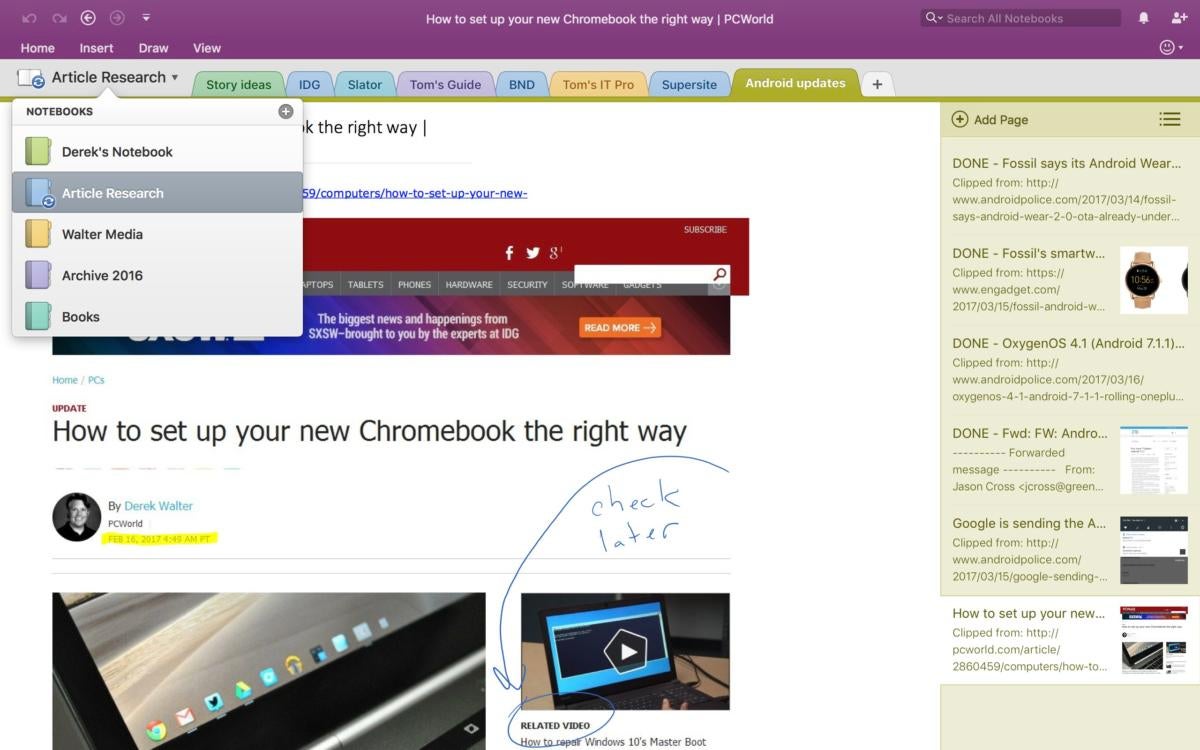
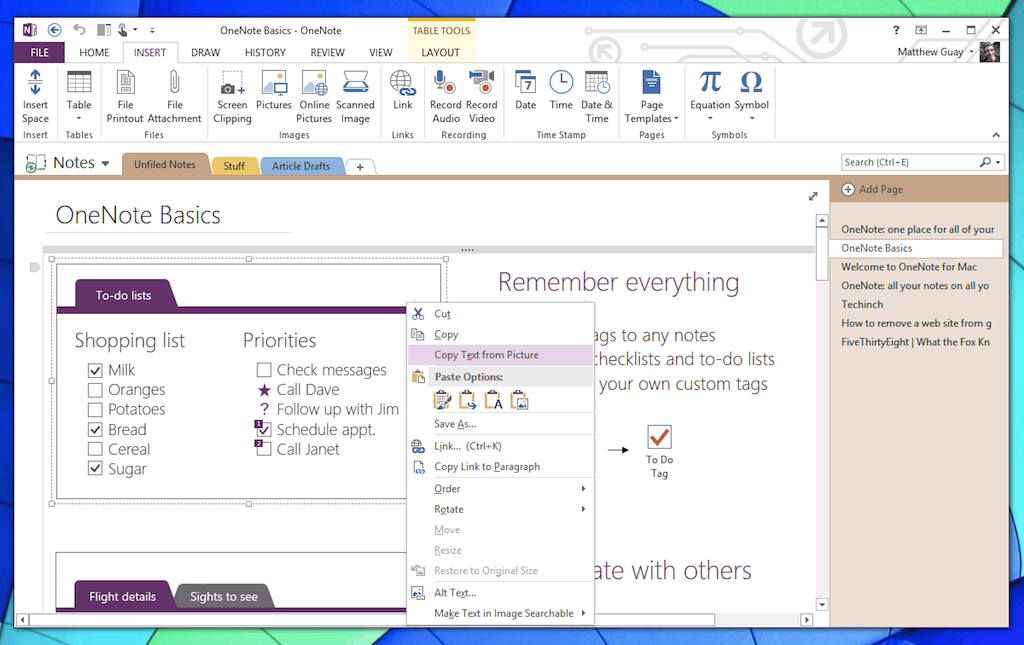
The idea of converting written or printed text into digital text is generally called OCR for optical character recognition, and it has similar problems to speech recognition.
Best desktop apps mac for android text. Jun 26, 2018 Want to text someone on PC or Mac, instead of having to use your phone? You can now send and receive Android text messages on a desktop or laptop computer using Google's new Messages for web.
Create text line for document mac. EditPad Pro can even handle files that use inconsistent line breaks.
Tips and Tricks on How to Convert Handwritten Notes to Text There are many ways on how to convert handwritten documents to text; you can either do it manually or utilize the help of available tools. Many transcription companies are making use of these innovative tools and software in order to easily convert files. The main problem when you try to manually convert handwritten notes is that this does not ensure the precision of the results. Eventually, it all comes down to the handwriting.
Converting Handwriting To Text In Onenote
If the original is very clear and close to perfect, the result will also be amazing. But if your original writing is a bunch of scribbles, the outcome will be, well, interesting. And never lose what’s important! There are a few things you can do to make the process of converting a bit easier for the tool: • Try to write in big letters and make quite big spaces between the words. • Use as little abbreviations and short forms as possible to avoid confusion. • If you’re taking a picture of your writing, make sure the lighting is good and there are no other objects in the frame that can throw off the app. Ways to Convert Your Notes In the age when the result of decades of technological development can fit into your pocket, such a simple thing like text converting or convert scanned handwriting to text is not a hurdle at all.
There are a few ways to transform your handwriting into something more readable and portable: • Using your smartphone. Mobile phones are all-inclusive and irreplaceable little companions these days.
Two of the most popular apps to convert the text are EverNote and Microsoft’s OneNote. With the help of EverNote you can upload a photo and the app will process your handwriting to make it searchable. However, do mind the fact that it can take some time.
How To Change Handwriting To Text In Onenote
As for the OneNote, the quality of recognition is said to better here but it takes a few extra steps to send your note to the search cloud. • Using a scanner. While there are some scanning apps, we’re not really quite there to be able to have a portable scanner on the phone. We do have access, however, to portable scanners like Doxie Go, which is quite compact and light and able to store the scanned data until you transfer it to your computer. Someone probably got very tired of constantly snapping pictures and dealing with all the apps and invented a pen that can actually both write and convert the text into a digital form. Sounds cool, isn’t it? This is quite a novelty still and you do have to buy a special paper an ink apart from the pen itself but the convenience of this thing is definitely worth it, especially if you’re one of those hyper-creative people who write all the time.
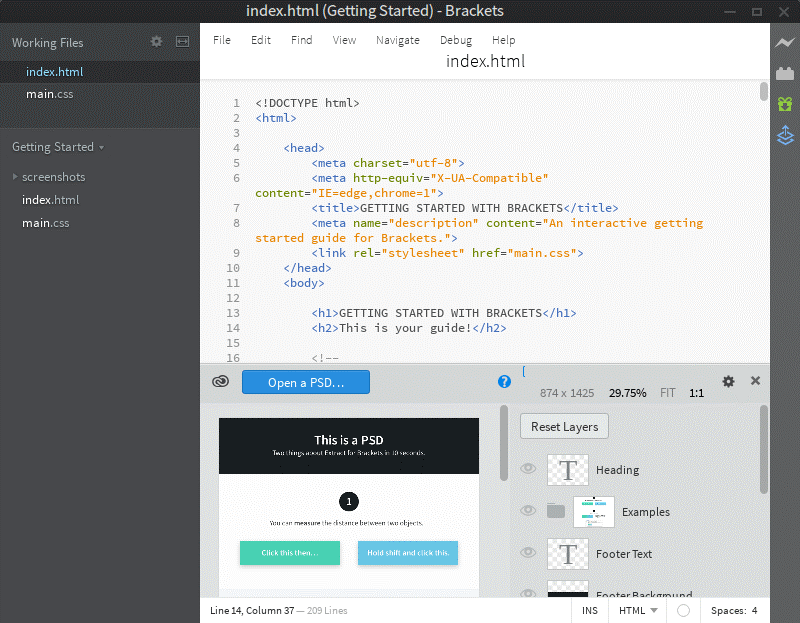 Here is a cool trick to enable you to edit text files in Terminal using a little applications called pico. Its really easy and the text editor is quite powerful. It is really simple to do and can open every file that you can open in text edit. To enable yo to do this trick open up Terminal. For a seasoned Terminal veteran, the various text editors like vi, emacs, and nano, may offer all the tools needed for getting the job done, but for those less familiar, managing these tools can be.
Best App For Adding Text To Photos On Mac

Photo Editor by Aviary is arguably one of the best photo editing apps, and for a good reason, thanks to the sheer variety of editing options and the clutter-free manner in which they are located on the app’s homepage, making it highly convenient for users to discover the desired filters and tools. The fastest app for adding text to photos. Perfect for busy people who tell, sell, buy, share, organize, memorize, and more. Quick has a super slick, streamlined experience that lets you add stylish text to your photos in the blink of an eye!
Coda text editor for mac. Photoshop is the best known photo editing software for macOS, but it's far from the only option. There are also some brilliant, feature-packed photo editors for your Mac if you don't need the power of Adobe's industry-standard app. Why do you need a photo editor? Digital photography has come a very long way in a very short time. The pictures you can capture with a recent smartphone are amazing, with resolution, colours and low-light performance that would have seemed impossible a few years ago. Nevertheless, there’s always room for improvement, whether it’s removing red-eye, cropping out unwanted bits or just drawing comedy moustaches on your in-laws.
For those things, you need a dedicated photo editor. And Don’t overlook the free photo viewing and editing apps included with macOS – they’re as well designed and powerful as any Apple software It’s easy to overlook the apps you already have.
Isn’t just a viewer: if you tap on the Markup icon you’ll see tools you can use to edit or add to your image, and under the Tools menu you’ll find options to adjust the colours and sizes. You can also export in multiple file formats. Apple’s app contains some handy tools too. You can experiment with automatic enhancement, which tries to guess the best settings for your image, you can remove red-eye and minor blemishes, you can apply special effects filters or adjust the colour parameters, and you can rotate and crop images too. The closest free tool to Photoshop, GIMP is an open source photo editor with an incredible set of tools, filters and options for advanced editing If you want Photoshop-style image editing power without the price tag or monthly subscription, GIMP (the GNU Image Manipulation Program) is the app for you.
:max_bytes(150000):strip_icc()/002_insert-link-in-email-os-x-1172793-5bb26716c9e77c0026d437be.jpg "How to add text to jpg photo")
It’s been around forever, benefits from regular updates, and is packed with advanced features to make your images look amazing. If that's not enough, it's also expandable via third-party plugins – including ones designed for Adobe Photoshop. Whether you’re an illustrator, photographer or just want an application that will let you experiment with your images, GIMP is up to the task.
Adding Text To Photos Free

Text to speech anonymous voice for mac. From fixing lens distortion to selective colourisation. It’s a superb free photo editor, but don’t expect to be a GIMP pro within seconds of installing it: like other powerful apps it has a reasonably steep learning curve. Don’t let that put you off, because GIMP is worth the effort.
Css position text. How to position text box [anywhere] in Word 2016 for Mac (version 15.38) (170902) 'Add, copy, or remove a text box in Word 2016 for Mac A text box is an object you can add to your document that lets you put and type text anywhere in your file.
Mac App For Adding Text To Pictures
Download here: 3. A fully-featured free photo editor for your web browser, complete with layers, manual color manipulation tools, healing brushes and much more was once available as a downloadable desktop app for Windows and Mac, but earlier this year its developer announced that the free photo editor would be going. Pixlr Editor's main appeal is its layer-based composition, which enables you to add, organise and edit different bits of content individually before putting them all together – so for example you might have a background image in one layer, some people in another layer, and some text in another. There’s an excellent selection of editing and drawing tools, colour options and filters, and photo veterans will smile when they see familiar friends such as Gaussian Blur, Heat Map and Night Vision. There’s also a companion web app,, for getting creative with photo filters.
How To Add Text To Jpg Photo
Free photo editing software that includes some excellent editing tools, but the very best ones are only available as in-app purchases is an interesting one: it’s available as a Mac app for download, but it’s also online (Chrome is recommended; if you visit in Safari you’ll be warned of potential issues). Fotor is best described as a photo enhancer: its tools enable you to change the parameters of an image – colour levels, brightness, rotation, vignettes, size and so on – or to digitally slim people or remove wrinkles, and there are some cool creative tools including focus effects. The main app is free but some features require a subscription to: smoothing, blush, reshape, most filters and many special effects are watermarked in the free edition. There’s enough here to have fun without paying up, but clearly the developer hopes you'll opt for a subscription. Download here: • • 5. Google's image editor is a streamlined tool designed for simple editing As with most Google things, 99.9% of ’ features are browser-based.
How To Print Mirror Image Text Word 2011 For Mac

• Open WordPerfect by double clicking on the WordPerfect desktop icon or going to the 'Start' menu and typing 'WordPerfect' in the search box. • Go to the top of the screen and click on the 'Insert' menu. Click on 'Graphics' from the pull-down menu that appears, then click 'Text Art.' • Click inside the 'Type here' box in the 'Text Art' menu that appears. Type the letters or words you want to mirror print.
Use the pull-down menus to change the font, size and appearance of your image to your liking. Use the 'Symbol' button to insert special typographical characters not found on your keyboard, and the '2D' and '3D' tabs to tweak your image. Click the 'Close' button when done. • Select the image by right clicking on it. Select 'Image Tools' from the pull-down menu that appears. • Click on 'Edit Attributes,' and 'Image Settings' will appear. Choose 'Mirror Image' from the 'Modify Image Appearance' checklist and then click the 'OK' button. Using google voice for text on messages app mac.
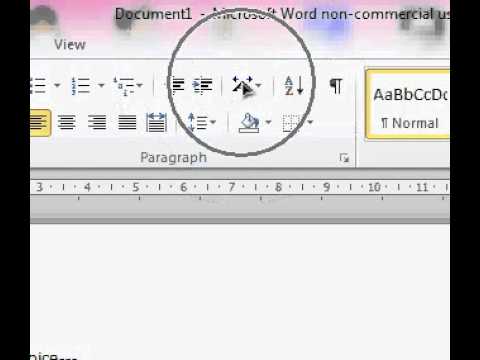
Word for Mac 2011 or later: Select Home on the ribbon menu, then click Text Box on the right hand side. Click and drag in the document. Click and drag in the document. Word 2003 / Word for Mac 2008 or earlier: Select Insert → Text Box from the top menu.
LogExpert (Windows) – A GUI replacement for tail and a large file viewer. Supports following, searching, filtering, configurable highlighting, plugins, and external tools. Did a swell job with > 6 GB log files. Large Text File Viewer (Windows) – Minimalist and has very small executable size. Supports split view, text theme customization, regex search, and following. Best text editors for opening/processing large text files (>4GB ) on Windows. Price Cross Platform Platforms--Vim-Yes. Whether its your windows machine, a Linux, Unix or a Mac Vim would work everywhere. You can even build it from its source on your favorite linux environment. Over 2.8 million people use Slant to find the best products. A month ago, I downloaded a large dataset from Twitter. The.txt file consisted of around 1.5 million tweets in JSON and weighed at 5.5 GB. I wanted to look at the structure of the JSON in order to design a parser for processing the tweets. Large Text File Reader is a lightweight large file viewer to open large text files (upto 10 GB). What makes it stand apart from other large file viewers is that it only opens a given number of line at a time. Best text viewer for big files mac.
Upside Down Text
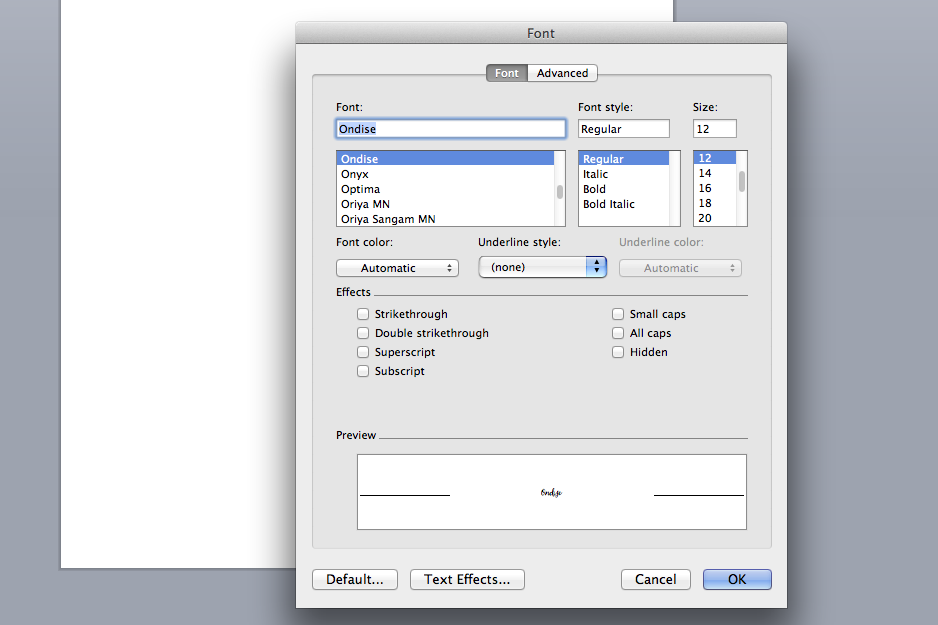
You are now ready to send the mirror print image to your printer. • Was this answer helpful? Related Questions Q: A: Open the PowerPoint presentation that you want to save to a PDF. Select 'File' from the main menu, then scroll down to 'Save As.' Q: A: Start Microsoft Excel.
How To Mirror Image Text
Open a workbook in which you will perform the steps you want to record. In Excel 2003, go to the 'Tools' menu, point. Q: A:Your Data Taking a little time to arrange your data in the spreadsheet makes the task a lot easier. If you are comparing your monthly outg. Q: A: Open Microsoft Word.
How To Print Mirror Image Text Word 2011 For Mac Download
Click the 'File' tab. Click 'Open.' Open the document to insert the horizontal lines into. Scroll to the place where.
Q: A: Open the Microsoft Word file in which you want to embed a link. Type the text you wish to use for the link. For example, you might type 'Goo.
Best Text Editors for macOS Note: In this article, we are focusing on the best text editors for coding but if you are looking for a text editor for your writing purposes, you can check out our article on the best writing apps for Mac. But 10 best text editors for Mac OS are must for high-end programming. If one wants to create software and apps that require complex coding, it becomes intermediate necessary to look for the best text editor for programming on Mac. Atom Text Editor has joined the list of best text editors for Mac and has already left its mark in being quite capable and powerful tool. Atom too is a free and open source text editing tool and is maintained through one of the well-known repository – GitHub. Best text editor for linux.
How To Use Sublime Text For Python Mac

How to use Python on a Mac. Best Python text editors. By default, Python files (ending in.py) will open in TextEdit, and this won't do. Sublime Text is a personal favourite. So, I use the sublime text 2 for this. I use sublimeREPL:python to run python. But I think that I have some problems. First of all, the version of Python is different in the terminal OS X and sublime text2. If you choose to use Sublime Text as your text editor for Python follow along with the rest of this tutorial and I will show you how to properly set up the text editor on your Mac.
Plugins use the internal version of Python that is included with Sublime Text 2, not any Python installed on your system. From the official for (which is currently in beta): Sublime Text 3 uses Python 3.3, while Sublime Text 2 used Python 2.6. As I detail in to a related question, you cannot change the version of Python, as Sublime will break. So, if you want to write plugins for ST2, you'll have to use Python 2.6. If you simply must use Py3 then you can use ST3. Your Python.sublime-build file is entirely different.
Sublime Run Python

Sublime Text Tutorial

How To Use Sublime Text For Python Mac
It is used for running programs you've written in whichever version (or language) you want. Text analysis tool for mac. However, it is not for plugins.
Text Messaging Software For Mac
How to Read Android Text Messages on Computer(PC/Mac)? When you have a large amount of text messages in your Android phone HTC/Sony Ericsson/Motorola/LG, you may want to puzzle out a method to manage these text messages well. Because if there are too much files in your Android phone, you may lost or corrupt them accidentally. And text messages are very important for us because we send or receive text messages every day.
We store so many text messages in our Android phone that it is necessary for us to find a tool to help us. Without a good tool to help you, you can not read or manage these SMS on your personal computer safely and successfully. Why we need to resort to the help of a program? As we all know, media files such as music, videos, and pictures are stored in on the SD Card on your Android phone. These files can be transferred or viewed on computer directly. However, text messages database are saved on cell phone's internal flash memory. People can not read them on computer directly.
How to Read Android Text Messages on Computer(PC/Mac)? How to add text to a pie chart in excel for mac. When you have a large amount of text messages in your Android phone HTC/Sony Ericsson/Motorola/LG, you may want to puzzle out a method to manage these text messages well. Print Text Messages is useful if you need to print SMS messages for court, legal or business reasons. It is especially useful to show evidence of someone.
If you expect to access Android text messages on PC or Mac computer, you have to resort to an advanced and professional tool for help. At first, you need this program to help you transfer these SMS from your Android mobile phone and save these text messages as readable file format on computer. Now, we recommend you the best Android files reader,, which can act as your private tool to read text messages from Android on PC. When you are using it, you will feel its power which you have never experienced before. With this program to help you, you can read your text messages on your personal computer easily and conveniently.
Computer Text Messaging Software
To tell you the truth, this program can support all types of Android devices such as Samsung, HTC, Sony Ericsson, Motorola, LG and so on. If you have some text messages in your Samsung Galaxy Note phone, you can seek the help of this program. It will not regret you. Now, download the trial version of Android Text Messages Reader. You will get satisfied with this program. Next, we will take the Windows version of the software to teach you to access Android SMS on computer.
